Evaluating clarity, navigation, and user control across key ordering flows
Role
Moderator + note-taker + synthesis/report owner
Output
Findings by task + prioritized recommendations
Method
Moderated tasks (think-aloud) + card sorting (IA)
▸ Focus: task success, clarity, and confidence in ordering
▸ Methods: moderated testing and IA validation
▸ Output: prioritized findings and recommendations
Scope & My Role
I defined task scenarios and success criteria, moderated remote usability sessions, captured detailed behavioral notes, synthesized findings into themes, and authored the final research report with clear, actionable recommendations.
Method / Approach
Sessions followed a think-aloud protocol with post-task questions. Card sorting was used to validate navigation labels and grouping, helping explain why users struggled rather than only where they failed.
Tasks Evaluated
▸ Create an account
▸ View rewards
▸ Find the nearest store location
▸ Order a custom bow
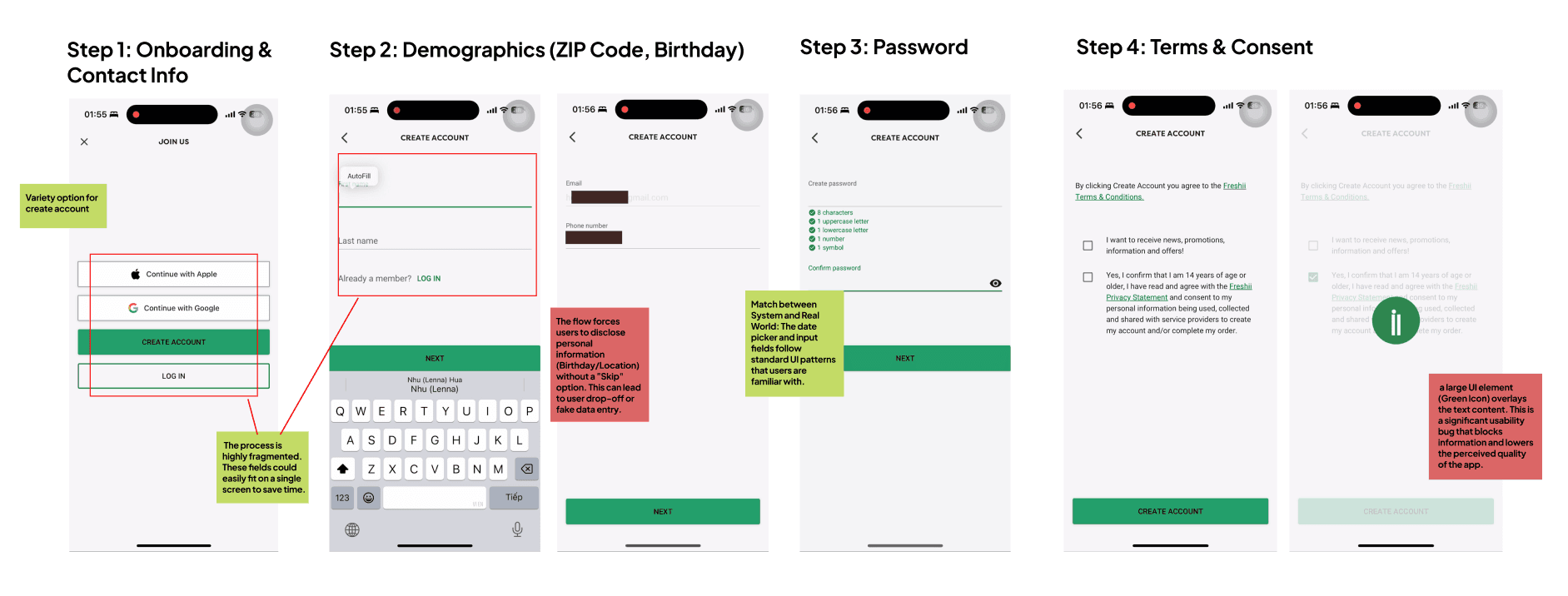
Scenario 1 - Creating an Account While Trying to Order
▸ User intent:
Get started quickly and place an order without friction.
▸ What happens:
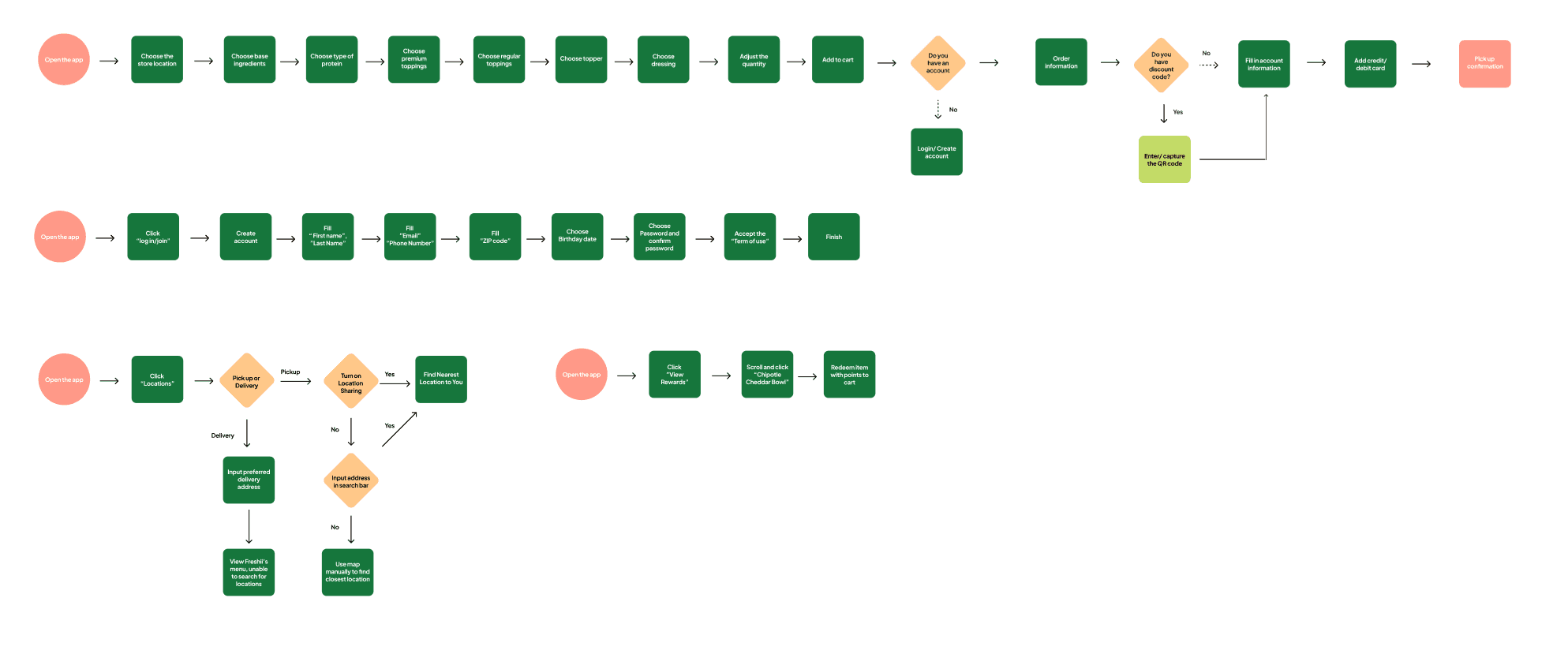
Account creation is highly fragmented across multiple screens, requiring users to disclose personal information (ZIP code, birthday) early in the flow, with no option to skip.
▸ Design insight:
While individual inputs follow familiar UI patterns, the lack of progress visibility and forced data entry reduces user control and increases drop-off risk during onboarding
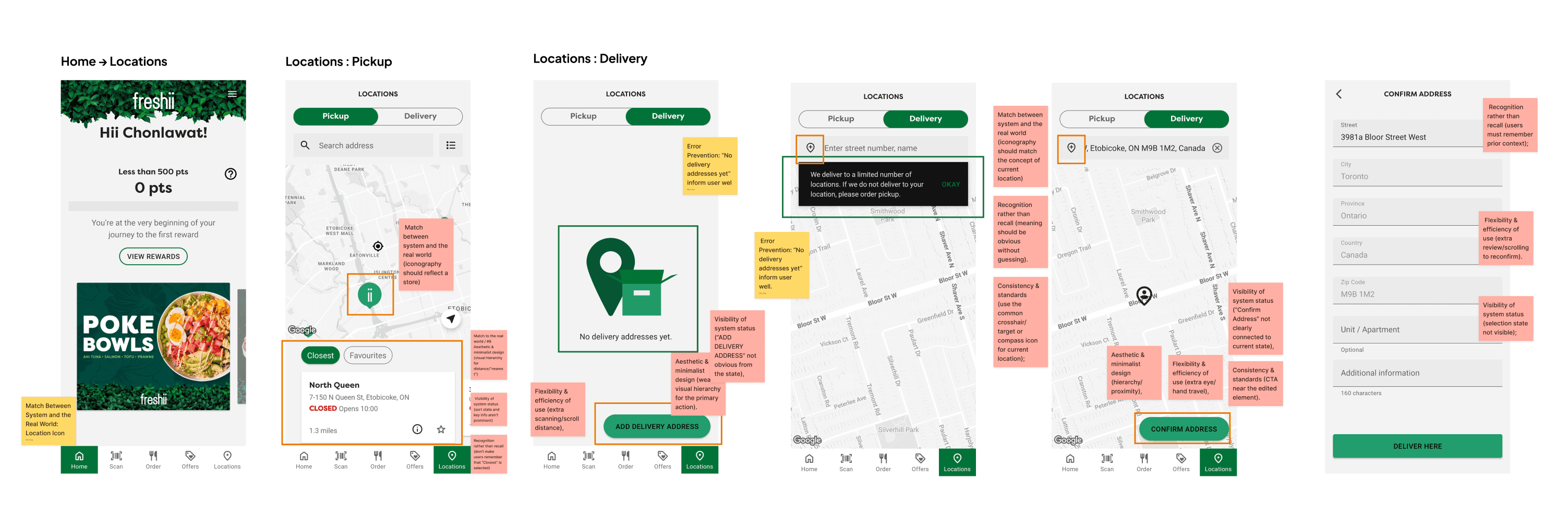
Scenario 2 — Finding the Nearest Freshii Location
▸ User intent:
Quickly confirm the closest store and choose pickup or delivery.
▸ What happens:
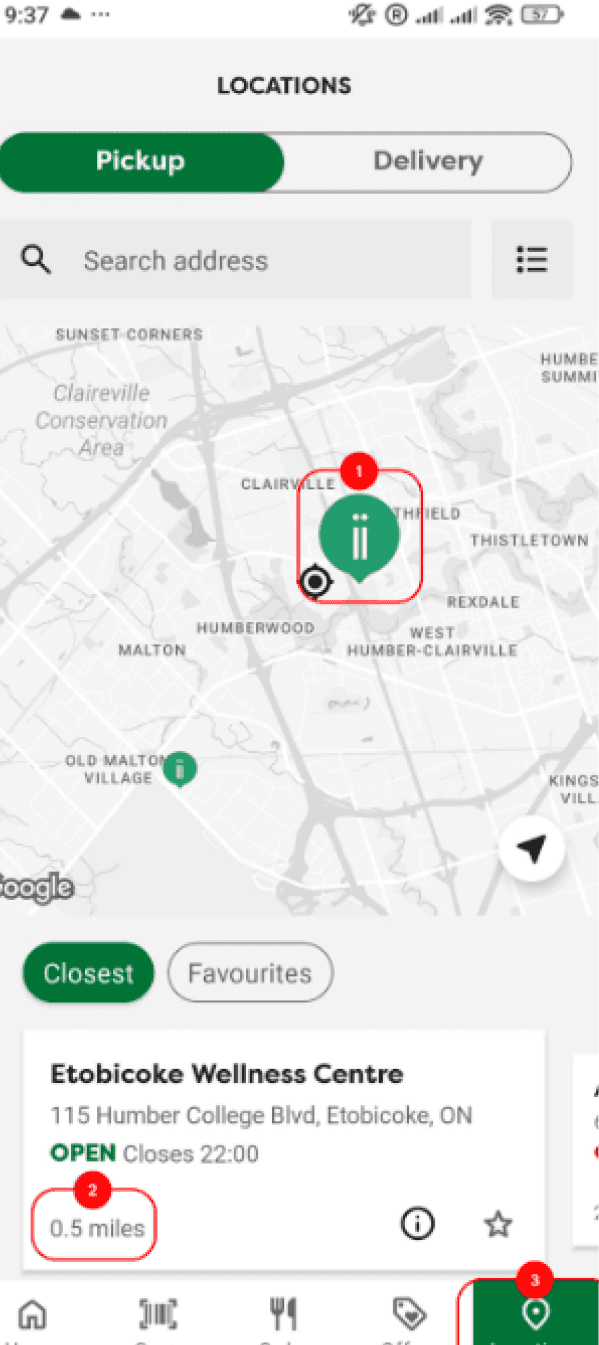
Location discovery relies on manual scanning and map interaction, with weak visual hierarchy for distance, selection state, and primary actions.
▸ Design insight:
Inconsistent iconography and unclear system states force users to remember context instead of recognizing it, increasing cognitive load for a simple task.
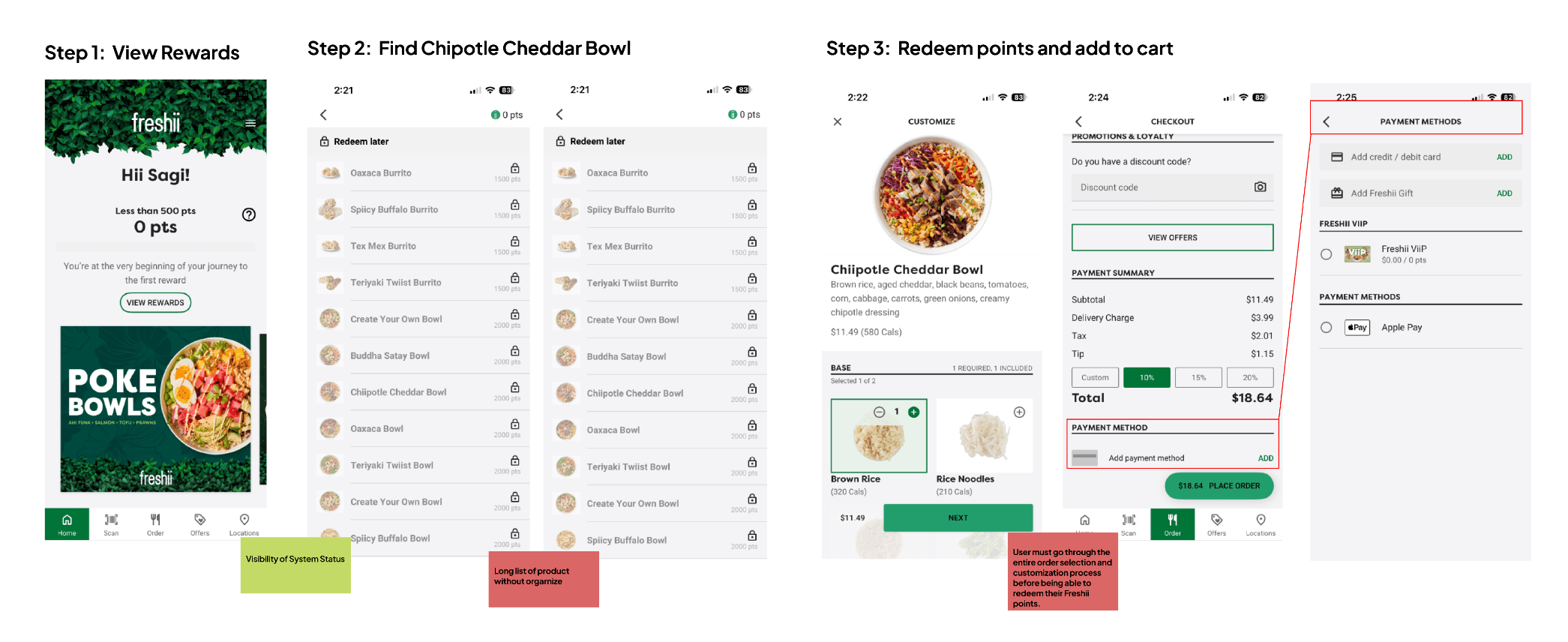
Scenario 3 — Redeeming Rewards for a Specific Item
▸ User intent:
Redeem points for a known reward (e.g. Chipotle Cheddar Bowl) with minimal effort.
▸ What happens:
Rewards are presented as a long, uncategorized list. Redemption requires users to complete the full customization and checkout flow before discovering where points can be applied.
▸ Design insight:
The system prioritizes process completion over user intent, hiding a high-value action (redeeming points) deep within the payment flow.
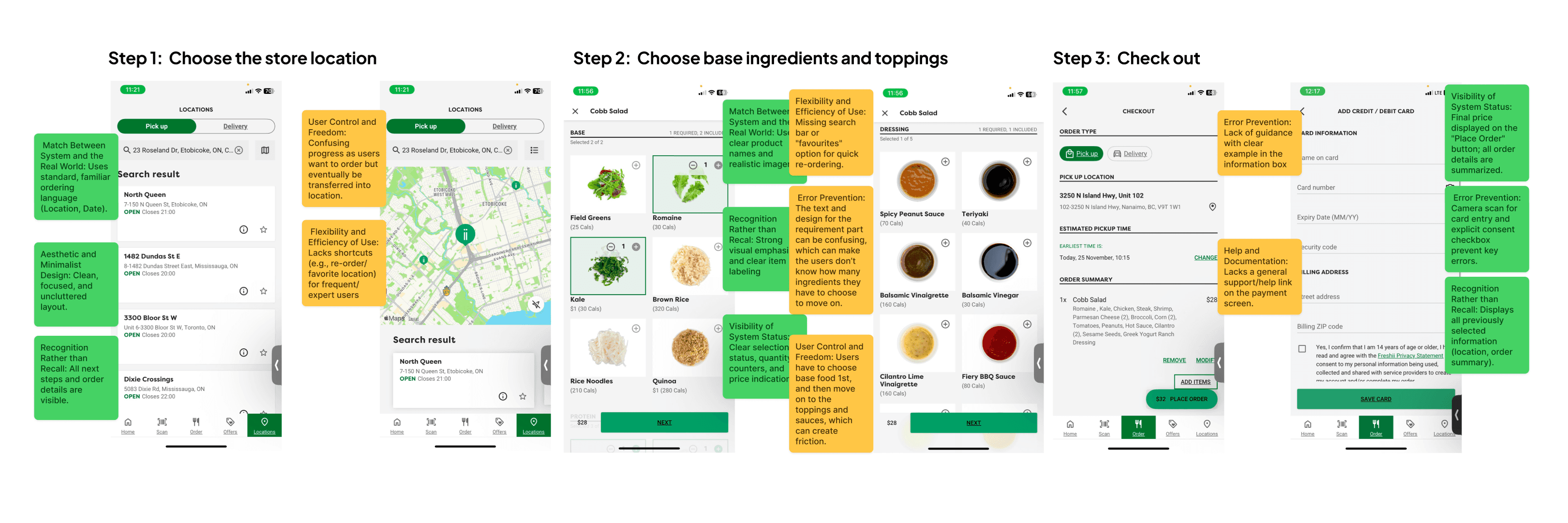
Scenario 4 — Ordering a Custom Bowl
▸ User intent:
Customize a meal efficiently while feeling in control of choices.
▸ What happens:
The flow enforces a rigid, linear order (base → toppings → sauces), with unclear requirements and limited flexibility to skip or adjust steps.
▸ Design insight:
Although visual clarity and pricing feedback are strong, forced sequencing and ambiguous constraints create friction during decision-heavy moments.
Outcome / Recommendations
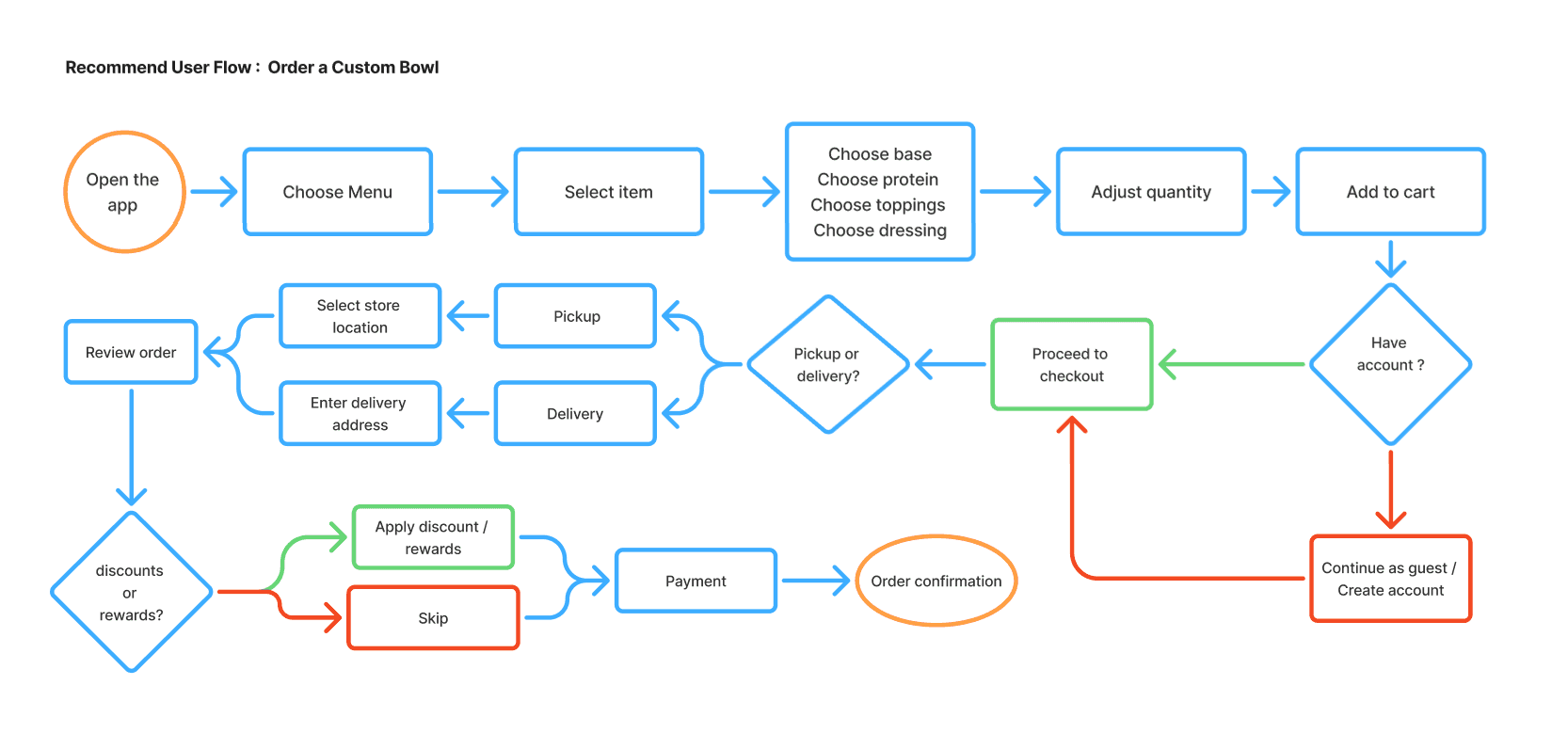
▸ Introduce progress indicators and clear completion feedback in multi-step flows
▸ Improve categorization and labeling in rewards and menu sections
▸ Allow optional inputs and clearer exit points during ordering
Reflection
▸ This project strengthened my experience moderating usability tests and synthesizing qualitative data into clear findings.
▸ It reinforced the importance of system feedback, information hierarchy, and user control in task-based mobile experiences.
Supporting Research
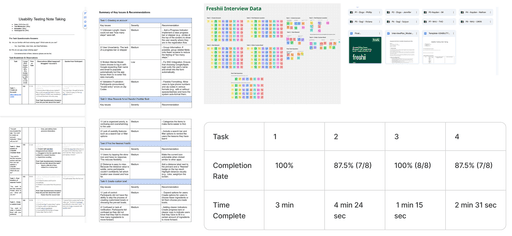
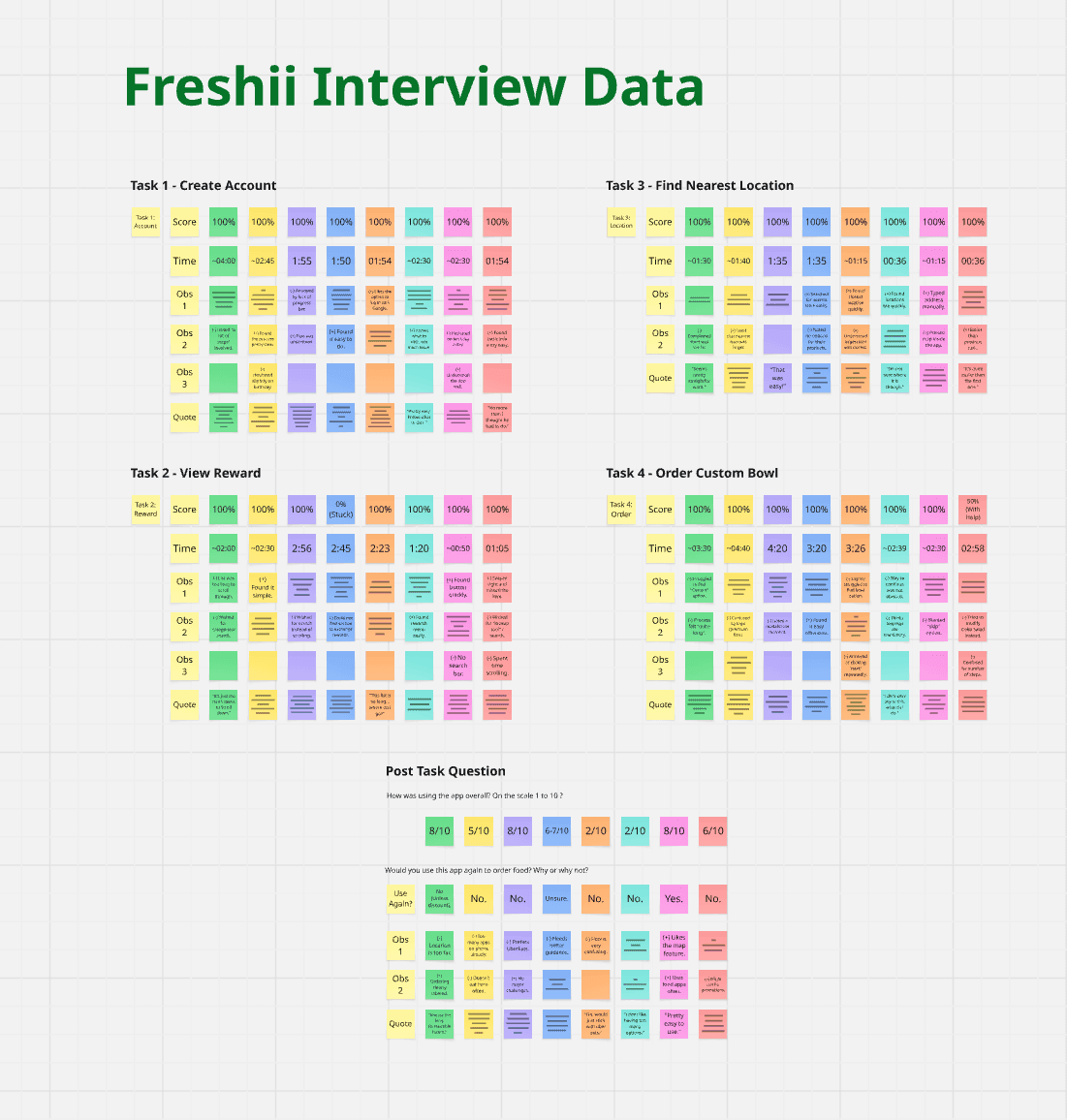
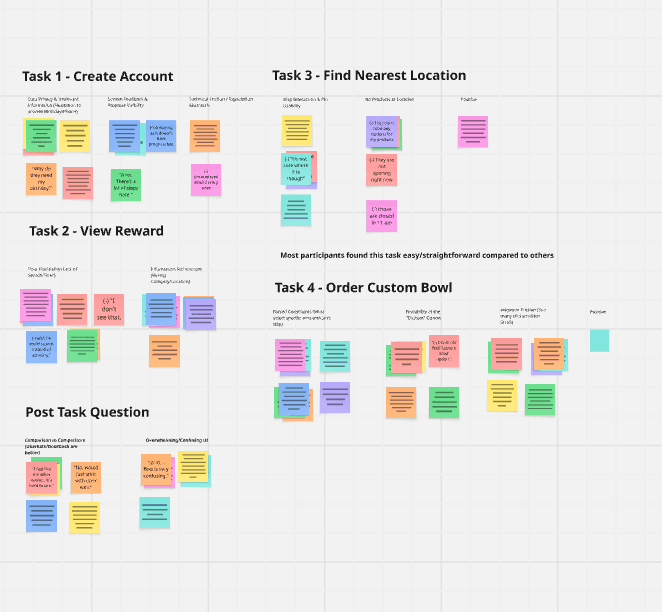
▸ Affinity maps
▸ Interview notes
▸ Task completion data