
Designing a comprehensive trust framework to reduce fraud and increase buyer confidence in peer-to-peer marketplace transactions.
Role
UX Designer
Focus
Safety mechanisms, fraud prevention, Trust signals
Methods:
User research, journey mapping, system design, prototyping
▸ Kijiji, as a peer-to-peer marketplace, faces ongoing challenges with trust and safety.
▸ Users frequently encounter scams, fraudulent listings, and safety concerns when meeting strangers for transactions.
▸ This project explored how trust signals, verification systems, and safety protocols could be integrated into the platform to create a more secure buying and selling experience.
Context & User
▸ Users hesitate when profiles are anonymous and listing quality is inconsistent
Trust must be visible in browse, listing view, and chat not only after contact
Scope & My Role
▸ Role: UX designer (systems + IA/flows + UI concept)
▸ Deliverables: trust pillar framework, user flows, key screens, expected impact metrics (proposed)
▸ Collaboration: team project; I focused on structure, decision points, and how trust is communicated
Approach / Method
▸ Identify high-risk moments (browse → contact → meetup)
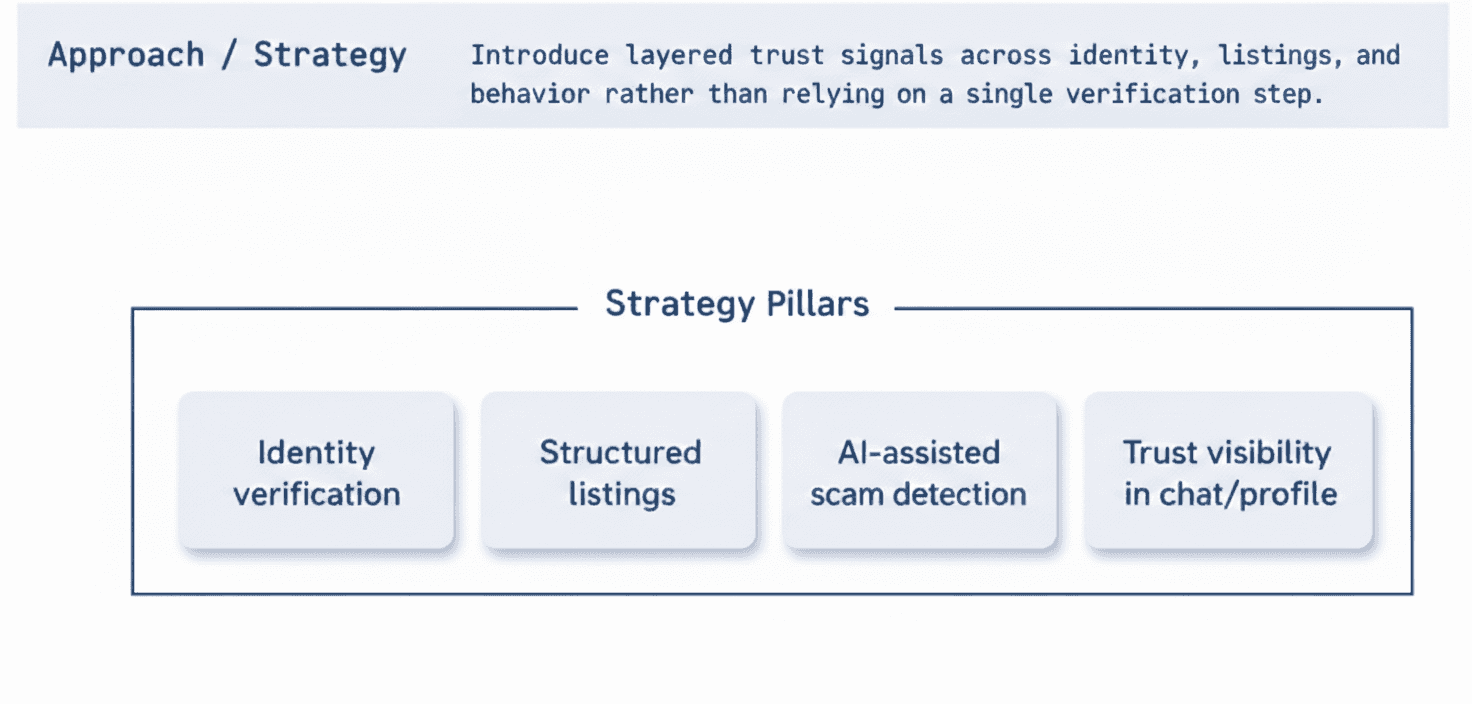
▸ Define trust pillars and placement rules
▸ Design flows + UI touchpoints where trust matters
Key decisions (3)
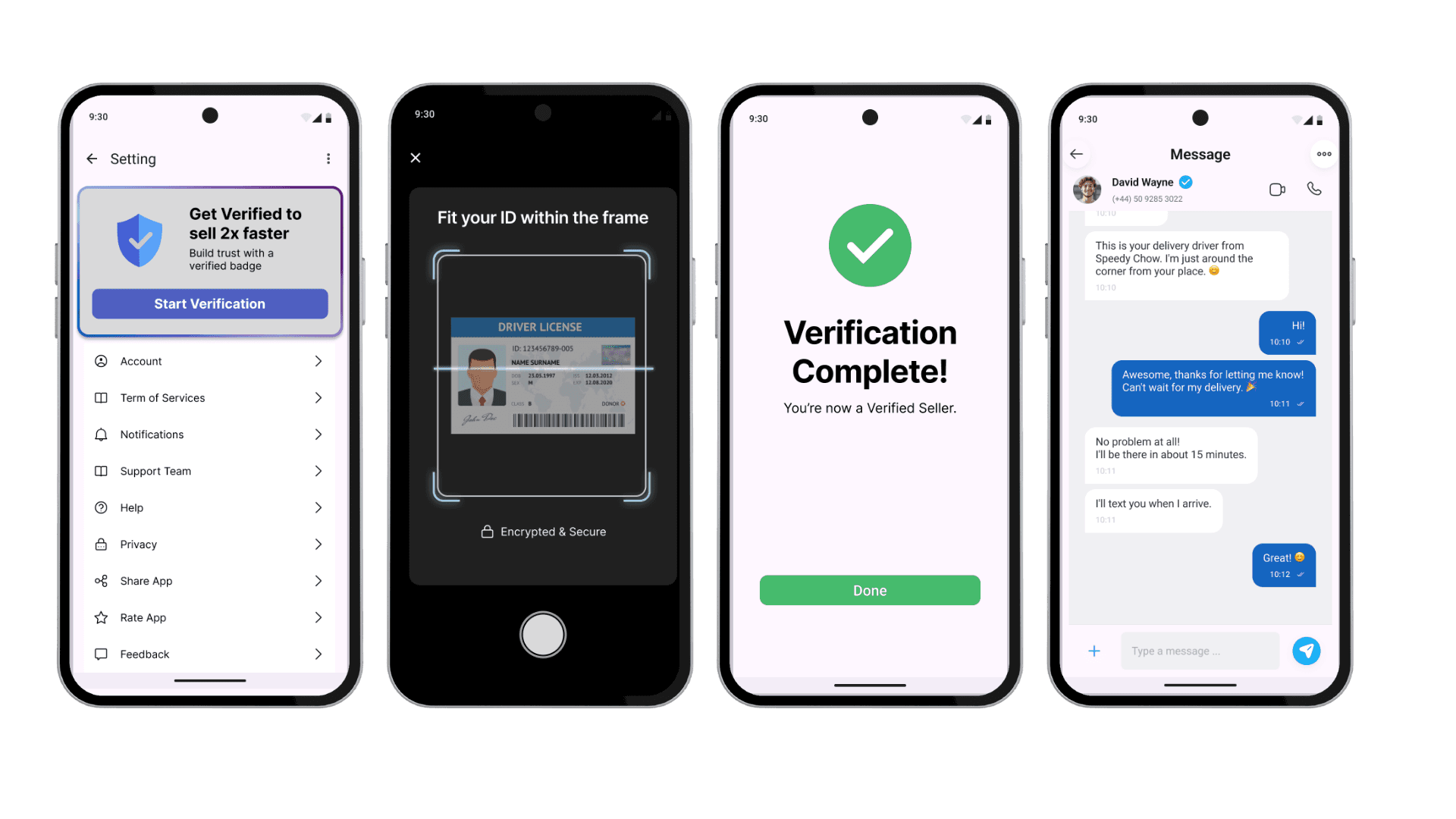
Decision 1 — Identity verification is contextual, not mandatory
Triggered via settings or high-risk actions
Reduces friction for casual users

Decision 2 — Listing quality is enforced before publishing
▸ Category-specific required fields
▸ Verification status influences posting flow

Decision 3 — AI acts as a safety net, not the main gatekeeper
▸ Scans content and behavior post-publish
▸ Flags suspicious listings without blocking all users

Recommendations
▸ Contextual verification triggered by high-risk categories/price thresholds
▸ Pre-publish listing structure (required specs, completeness checks)
▸ AI safety layer: warn/hold suspicious content post-publish with transparent messaging
Artifacts
▸ Identify high-risk moments (browse → contact → meetup)
▸ Define trust pillars and placement rules
▸ Design flows + UI touchpoints where trust matters
Reflection
▸ Trust must be visible at decision points
▸ Over-verification risks excluding valid users
▸ Platform responsibility extends beyond digital interactions
▸ This project reinforced my interest in designing systems where UX decisions directly affect real-world safety.
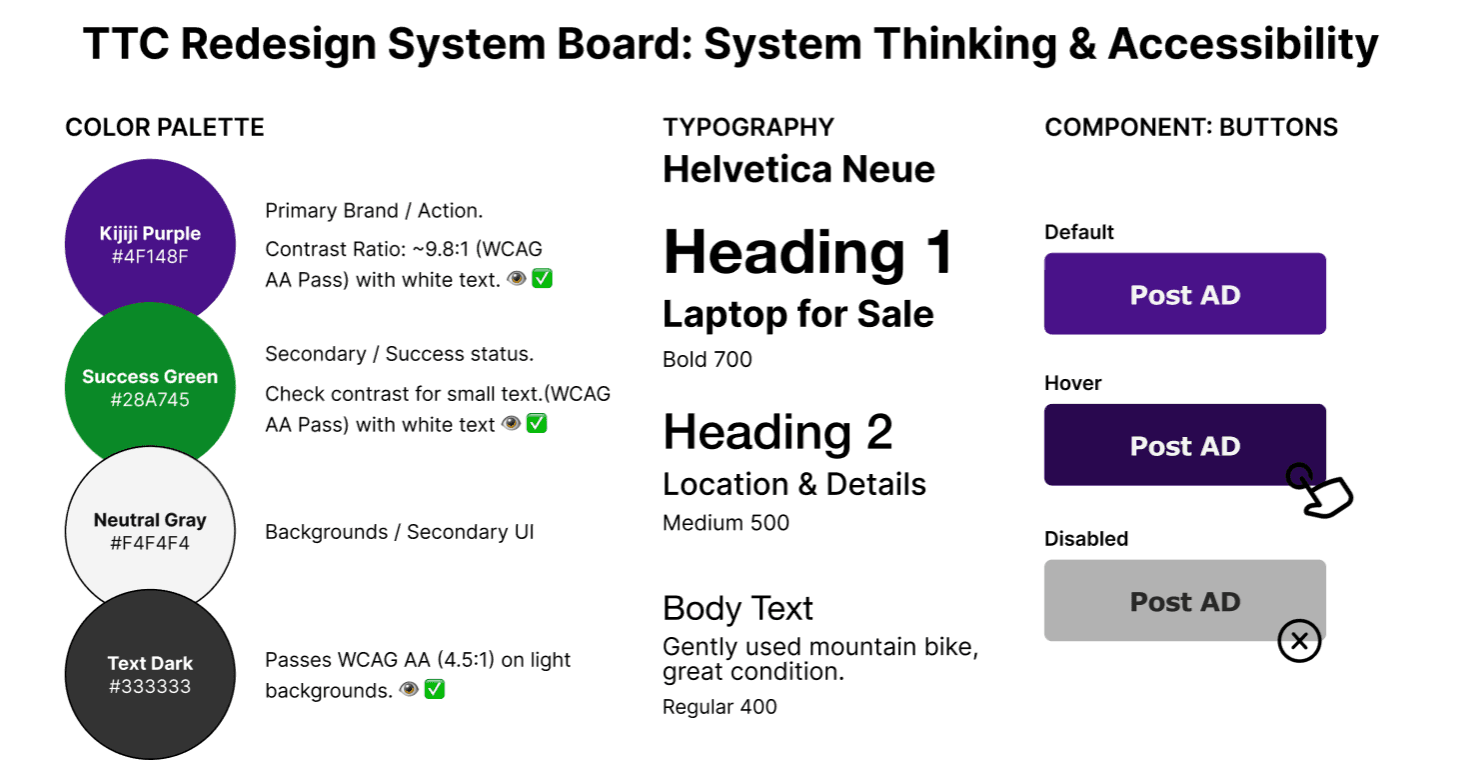
This project focuses on conceptual UX and system design. Budgeting, timelines, and technical implementation were explored in the academic proposal but are not included here.